Imaging beneath irregular water bottom in the Northwest Shelf of Australia
 | |
| Series | Investigations in Geophysics |
|---|---|
| Author | Öz Yilmaz |
| DOI | http://dx.doi.org/10.1190/1.9781560801580 |
| ISBN | ISBN 978-1-56080-094-1 |
| Store | SEG Online Store |
The third 2-D case study for structural inversion is from the Northwest Shelf of Australia. This case study deals with the deleterious effect of an irregular water-bottom topography, which is associated with a reef, on the geometry of the underlying reflectors. Shown in Figure 10.3-1 is the CMP-stacked section. The elevation difference between the top and base of the reef is nearly 500 m, and the lateral extent of the reef is about 7.5 km. Note the typical pull-up effect on the reflections below.
The water-bottom reef causes anomalous behavior in the stacking velocity field as seen in Figure 10.3-2. Time migration using a smoothed form of the stacking velocity field produces a distorted image of the subsurface (Figure 10.3-3). Note, for instance, the typical overmigration character below the reef edges.
-
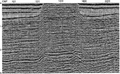 Figure 10.3-1 The Offshore Australia line: unmigrated CMP stack. (Data courtesy Schlumberger Geco-Prakla.)
 -
 Figure 10.3-2 The Offshore Australia line: stacking velocity field with the time horizons interpreted from the unmigrated CMP-stacked section shown in Figure 10.3-1.
 -
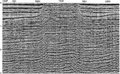 Figure 10.3-3 The Offshore Australia line: poststack time-migrated CMP stack.


See also
- Imaging beneath volcanics in the West of the Shetlands of the Atlantic Margin
- Imaging beneath shallow gas anomalies in the Gulf of Thailand
- Earth modeling and imaging in depth
External links
| find literature about Imaging beneath irregular water bottom in the Northwest Shelf of Australia |

|

|

|

|

|

|

|